
Plastic waste is now a major environmental problem we face today. From food deliveries and takeaways to everyday household use, single-use plastic cutlery has contributed massively to landfills, ocean pollution, and long-term ecological damage. As people across the world look for practical ways to adopt eco-friendly lifestyles, compostable cutlery has emerged as a powerful and sustainable alternative. Created from natural plant-based materials, compostable cutlery offers a cleaner way to dine—without leaving harmful waste.
What is Compostable Cutlery?
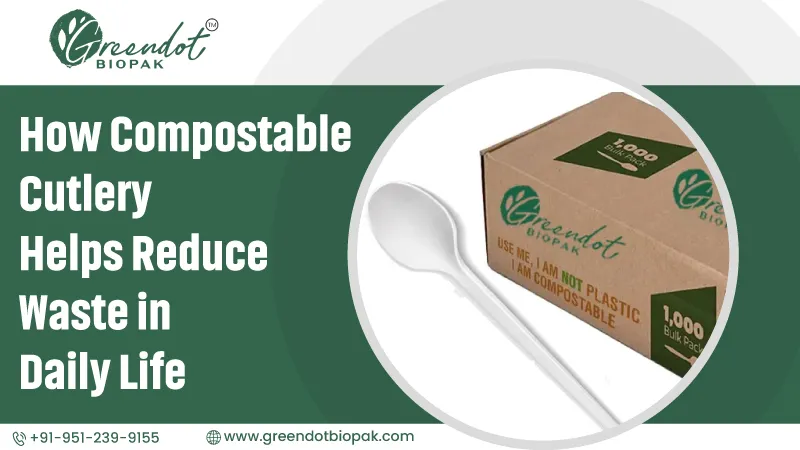
Compostable cutlery is made using materials such as cornstarch, sugarcane bagasse, PLA (polylactic acid), and other plant-based polymers. Unlike traditional plastic spoons, forks, and knives that remain in the environment for hundreds of years, compostable cutlery breaks down naturally in industrial or home composting conditions.
This type of eco-friendly cutlery does not release toxins during decomposition and becomes organic matter that enriches the soil. The rising popularity of compostable products has driven demand across households, restaurants, and large-scale food operations. This shift is supported by reliable Compostable Green Cutlery Manufacturers like Greendot Biopak, who focus on clean, sustainable production and high-quality materials.
How Compostable Cutlery Reduces Waste in Daily Life
Switching from plastic to compostable cutlery may seem like a small step, but it creates meaningful change. Here are the many ways it helps reduce waste in daily life.
Reduces Landfill Waste
A significant portion of landfill waste comes from disposable food service items. Compostable cutlery breaks down naturally and does not accumulate in landfills. With large volumes diverted from the waste stream, cities experience reduced landfill load and lower operational costs.
Low Environmental Impact
Traditional plastic production uses fossil fuels, releases greenhouse gases, and generates toxic byproducts. Compostable cutlery is produced using renewable plant-based resources. It breaks down without harming the ecosystem, supporting long-term environmental sustainability.
Supports a Zero-Waste Lifestyle
More households and businesses are moving toward zero-waste practices. Compostable cutlery fits perfectly into a zero-waste routine because:
- It decomposes naturally
- It does not produce microplastics
- You can throw it into the compost with your food scraps.
Reduces Ocean Pollution
Millions of tons of plastic waste end up in rivers and oceans annually. Compostable cutlery offers an ocean-friendly alternative that prevents long-term pollution and protects marine ecosystems. Since it breaks down naturally, it does not harm sea creatures or contribute to microplastic contamination.
Encourages Responsible Consumption
When people switch to compostable products, they become more aware of consumption patterns. This creates long-term behavioral change, encouraging individuals and businesses to adopt greener choices in all aspects of life. For restaurants, corporate offices, cafés, and event organizers, using compostable cutlery shows commitment to sustainability and responsible consumption.
Applications of Compostable Cutlery in Daily Life
Compostable cutlery has become increasingly common across multiple industries and everyday environments. Some of the most popular uses include:
- Home Use: Families use compostable forks, spoons, and knives for picnics, parties, and daily meals to reduce household waste.
- Restaurants & Cafés: Businesses switching to compostable cutlery attract eco-conscious customers and strengthen their brand image.
- Corporate Offices: Workplaces implementing sustainability programs often replace plastic cutlery in cafeterias with compostable alternatives.
- Schools & Colleges: Educational institutions adopt compostable cutlery to teach students environmental responsibility.
- Events & Catering: Large gatherings such as weddings, conferences, and festivals reduce massive waste generation by using compostable products.
- Takeaway & Food Delivery: Food delivery services increasingly prefer biodegradable and compostable cutlery to support sustainable packaging solutions.
Benefits of Using Compostable Cutlery
- Eco-Friendly and Sustainable: Made from renewable materials, compostable cutlery supports cleaner production processes and decomposes organically.
- Safe for Food Contact: It is free from harmful chemicals found in many conventional plastics, making it safer for food consumption.
- Strong and Durable: High-quality compostable cutlery offers performance similar to standard plastic while being far more environmentally responsible.
- Reduces Carbon Footprint: Plant-based materials have a lower carbon footprint during production, contributing to climate-friendly consumption.
- Supports Circular Economy: Products break down into compost that enriches the soil, promoting sustainable agricultural cycles.
Why High-Quality Manufacturing Matters
Quality manufacturing plays an essential role in producing compostable cutlery that is strong, reliable, and truly eco-friendly. Poor-quality compostable products may break easily, fail to decompose properly, or contain blended plastics. That is why choosing the right Compostable Green Cutlery Manufacturers is extremely important.
Greendot Biopak focuses on:
- Premium bio-based raw materials
- Clean, controlled manufacturing processes
- Quality testing for strength and performance
- Consistent supply for businesses and households
- Strict environmental responsibility practices
This commitment to excellence creates cutlery that delivers both quality and sustainability.
Why Choose Us
Greendot Biopak has built a strong reputation as a trusted provider of compostable products in India. As one of the leading Compostable Green Cutlery Manufacturers, Greendot Biopak delivers premium compostable cutlery that supports everyday sustainability. The company designs its products with a focus on environmental responsibility, quality performance, and user convenience. Greendot Biopak uses high-grade plant-based materials to create sturdy, biodegradable alternatives to plastic cutlery. With a commitment to waste reduction, advanced production methods, and ongoing innovation, Greendot Biopak helps households, businesses, and food service providers adopt eco-friendly habits with confidence. Their goal is to offer products that contribute to a cleaner planet while supporting the practical needs of modern living.
Conclusion
Compostable cutlery plays an important role in reducing daily waste and promoting sustainable living. By replacing plastic forks, spoons, and knives with plant-based alternatives, individuals and businesses contribute to a cleaner environment, reduced landfill waste, and healthier ecosystems. Companies like Greendot Biopak provide high-quality compostable products that support this shift toward greener habits. Choosing compostable cutlery is a simple yet powerful step toward reducing pollution and creating long-term environmental impact. With responsible consumption and the right manufacturing partners, adopting compostable alternatives becomes easy, convenient, and meaningful for daily life.
To learn more about Compostable Cutlery contact us at +91 95123 99155 or email info@greendotbiopak.com
Key Takeaways
- Compostable cutlery helps reduce daily plastic waste by offering a natural, biodegradable alternative that breaks down safely without harming the environment.
- Switching from plastic to compostable cutlery supports eco-friendly lifestyles, encourages responsible consumption, and reduces landfill accumulation across homes and businesses.
- High-quality cutlery from reliable Compostable Green Cutlery Manufacturers, such as Greendot Biopak, provides strong, durable, and food-safe options for everyday use.
- Compostable cutlery is suitable for homes, restaurants, offices, events, and takeaways, making it a versatile solution for sustainable food service needs.
- Choosing compostable cutlery contributes directly to cleaner oceans, lower carbon emissions, and a healthier planet, making it one of the simplest yet most effective green alternatives available today.