
Key Takeaways
- Understanding the right film thickness enhances packaging performance for your product.
- Compostable shrink film wrap suppliers in Gujarat offer various thickness options for diverse applications.
- Selecting the appropriate thickness requires balancing protection, flexibility, and the specific packaging process.
- Always consult your supplier with detailed application information to avoid common thickness selection mistakes.
- Evaluating product characteristics like weight and shape is crucial before choosing shrink film thickness.
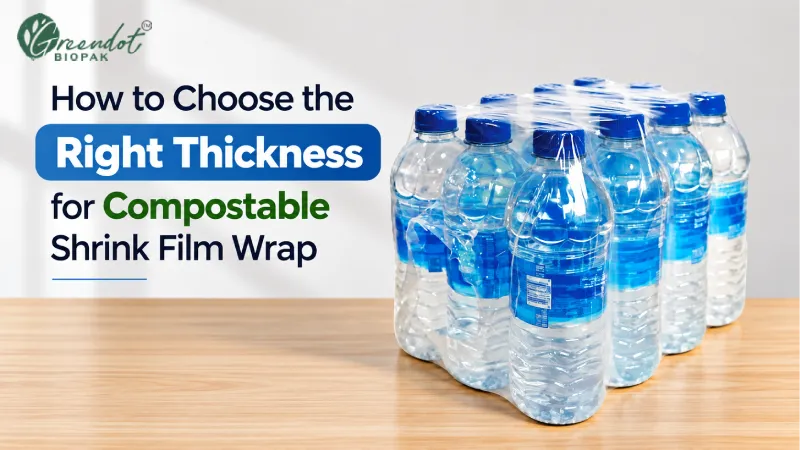
Greendot Biopak is a leading manufacturer and exporter of compostable shrink films. Choosing the right film thickness is an important part of getting reliable packaging performance without selecting a material that is unsuitable for the application. For businesses comparing compostable shrink film wrap suppliers in gujarat, understanding how thickness affects protection, flexibility, shrinking, and handling can make the selection process much easier.
Why Film Thickness Matters
Thickness directly affects how the film behaves during packaging and handling. A very thin film may be suitable for certain lightweight applications, while heavier or more demanding packaging may require a different thickness.
The right choice is not simply about selecting the thickest available option. The ideal thickness should match the product, packaging format, handling requirements, and desired performance.
Greendot Biopak's shrink film page lists standard thickness options from 15 to 70 microns, along with applications including protective packaging, master packaging, shrink sleeves, cap seals, and shrink labels.
1. Start With the Product Being Wrapped
The first question should always be: what are you wrapping?
A lightweight product generally does not require the same film characteristics as a heavier product or a group of products being packaged together. The shape of the product also matters because corners, edges, and uneven surfaces can affect how the film behaves during shrinking and handling.
Before choosing thickness, consider the product's weight, shape, surface, and whether it is packed individually or as part of a combination pack.
Product characteristics should come before thickness selection.
2. Consider the Packaging Format
Compostable shrink film can be used for different packaging formats, so one thickness should not automatically be treated as suitable for every application.
Greendot Biopak identifies its shrink films for protective packaging, master packaging, shrink sleeves and cap seals, as well as shrink labels. The company also describes the film as having flexibility, transparency, tensile strength, and shrinking performance for packaging applications.
For this reason, buyers should first identify the packaging format and then discuss the appropriate thickness with the supplier.
3. Think About Handling and Protection
The packaging environment can affect the practical thickness requirement.
If a packaged item will be handled frequently, transported, bundled with other items, or exposed to normal warehouse movement, the film needs to provide suitable protection for that application.
A film that is selected only for appearance may not provide the handling characteristics required by the business. On the other hand, unnecessarily choosing a heavier film may not be the most practical approach.
The objective is to find a balance between protection, flexibility, shrink performance, and the actual packaging requirement.
4. Match Thickness With Shrinking Behaviour
Shrink film is designed to contract around a product when exposed to heat. The film page states that the material can be applied using a heat gun or shrink tunnel and conforms to the shape of the packaged object when heated.
Thickness should therefore be considered alongside the packaging equipment and process being used.
Before selecting a film, buyers should discuss:
- The type of shrinking equipment being used
- Whether packaging is manual or automated
- The product shape and dimensions
- The required appearance after shrinking
- The level of film flexibility needed
This helps connect film selection with the real packaging process instead of choosing thickness in isolation.
5. Check the Balance Between Flexibility and Strength
A shrink film must be practical to handle while also providing the strength required for its intended use.
Greendot Biopak describes its shrink film as offering 2.5X elongation, higher transparency, good insulation, good printability, and high tensile strength for industrial purposes.
When comparing thicknesses, buyers should therefore avoid focusing on one property alone. A useful selection considers how the film needs to stretch, shrink, conform to the product, and withstand normal handling.
Thickness should support the complete performance requirement, not just one packaging characteristic.
6. Consider Transparency and Presentation
For products where visibility matters, buyers should also consider how the chosen film performs visually.
The product page highlights higher transparency and clarity, making appearance another relevant consideration when selecting shrink film.
A suitable thickness should work with the packaging objective while maintaining the required appearance. This becomes particularly relevant for retail-oriented packaging, shrink labels, sleeves, and applications where the wrapped product needs to remain visible.
The best thickness is therefore a balance between functional requirements and the desired finished appearance.
7. Ask the Supplier Before Finalising the Specification
One of the simplest ways to reduce thickness-selection errors is to involve the supplier early.
Businesses looking for compostable shrink film wrap suppliers in gujarat should provide clear application details rather than asking only for a generic film recommendation.
Use this quick buyer checklist:
- Product type and approximate weight
- Product dimensions and shape
- Individual or master packaging requirement
- Manual or automated shrink process
- Heat source or shrink tunnel details
- Required transparency and appearance
- Handling and protection expectations
- Preferred film thickness range, if already known
Providing this information gives the supplier a much clearer understanding of the application.
A Simple Thickness Selection Approach
Instead of selecting thickness based only on a number, follow a practical sequence.
- Define the product – Identify its weight, shape, dimensions, and packaging format.
- Define the process – Confirm whether the film will be applied manually or through automated equipment.
- Define the performance need – Consider flexibility, protection, shrink behaviour, transparency, and handling requirements.
- Discuss the suitable range – Ask the supplier to recommend a thickness based on the complete application.
- Evaluate the finished package – Check how the selected film performs during shrinking and normal handling before standardising the specification.
This process keeps thickness selection application-focused instead of treating it as a one-size-fits-all decision.
Common Mistakes Buyers Should Avoid
Thickness-related mistakes are often caused by making assumptions before understanding the application.
The most common issues include:
- Choosing the thickest film simply because it appears stronger
- Selecting a thickness without considering product weight
- Ignoring the shrinking equipment being used
- Focusing only on appearance and not handling requirements
- Comparing thickness without comparing the intended packaging application
- Ordering before discussing actual product and process requirements
A good packaging decision starts with application details, not with thickness alone.
Why Choose Us
Greendot Biopak provides compostable shrink film solutions for different packaging requirements, with product specifications covering multiple thicknesses and applications. Our shrink film range is described for protective packaging, master packaging, shrink sleeves, cap seals, and shrink labels, with features including flexibility, transparency, printability, insulation, and tensile strength. We work with buyers to understand the application first, helping them discuss a more suitable film specification for their packaging process.
Conclusion
Choosing the right thickness for compostable shrink film wrap requires more than comparing micron values. The product's weight and shape, packaging format, shrinking process, handling conditions, flexibility, strength, and appearance all influence the decision. Buyers should also discuss their application with experienced compostable shrink film wrap suppliers in gujarat before finalising a specification. With the right information, businesses can select a film thickness that is better aligned with their actual packaging requirements and production process.
Looking for the right compostable shrink film for your packaging application? Greendot Biopak can help you discuss your product, packaging format, and thickness requirement with our team.
Call us: +91 951-239-9155
Email: info@greendotbiopak.com